
One of the most interesting perspectives in hockey comes from people who have experienced the game from multiple roles.
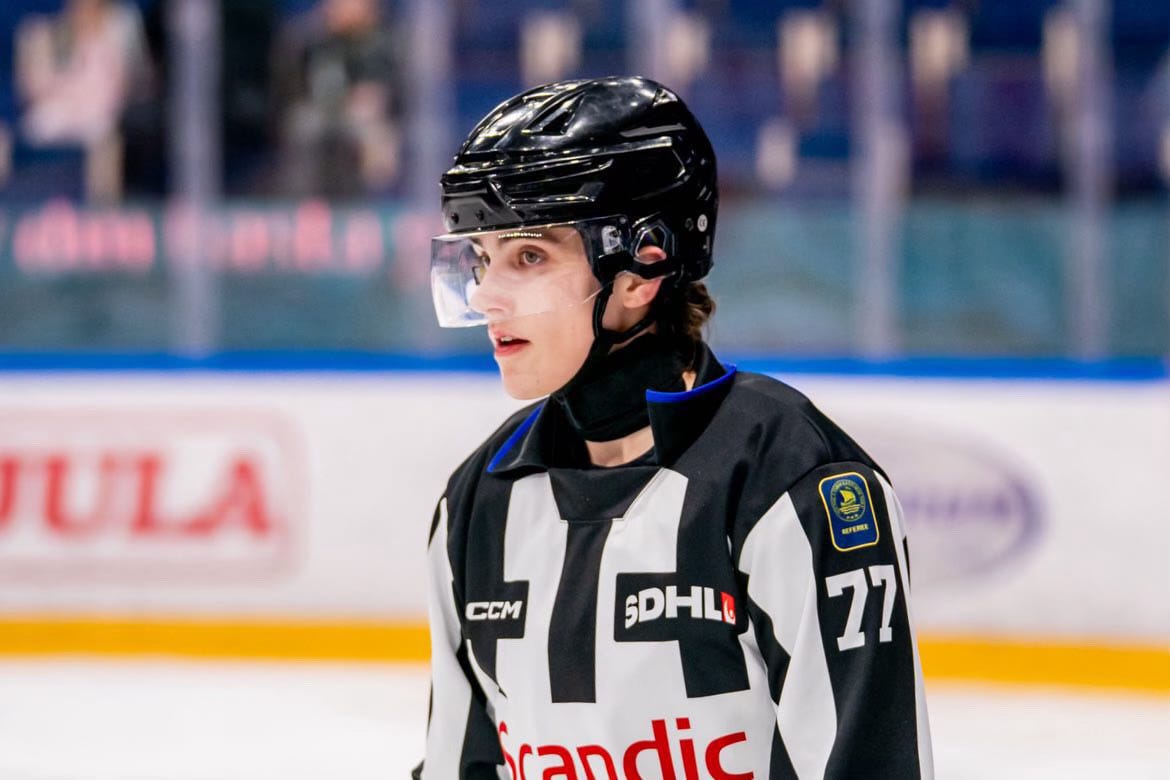
In this episode of Rinkside Rundown, I’m joined by Eva Harrison, a hockey referee and former player whose journey through the sport began outside of the traditional hockey pipeline. Growing up in the UK, Eva found the game later than most, navigated limited access and opportunity, and eventually carved out a place for herself both as a player and as an official.
Her story isn’t just about getting to the ice. It’s about how perspective shapes the way you understand the game.
Finding Hockey Outside the Traditional Path
Eva’s introduction to hockey came through family connections in the United States. Still, her development took place mainly in the UK, where access to rinks and junior programs was far more limited. Living near Guildford, she was drawn in by the speed and physicality of the game, even if the pathway to playing wasn’t straightforward.
Starting in her mid-teens meant she was already behind players who had grown up in structured systems. With long travel distances to rinks and few local opportunities, progress required patience and self-motivation. She spent time working on her skills at home, using inline skating to stay connected to the game whenever ice time wasn’t available.
That non-traditional start would later become a defining part of her relationship with hockey.
Working Through the UK System
Eva eventually worked her way through the levels of women’s hockey in the UK, earning a spot in the Elite League with Streatham, the only London-based team competing at that level. The league brought together homegrown players alongside imports from North America, creating a competitive environment that demanded adaptability.
Playing against NCAA-trained athletes and experienced professionals reinforced the importance of preparation and resilience. For Eva, reaching that level wasn’t about skipping steps. It was about staying committed through every stage of development, even when the process took longer than expected.
That experience also reinforced something she often returns to: there is no single correct path through the sport.
From Playing to Officiating
Transitioning into officiating gave Eva a completely different perspective on the game. Seeing hockey from the middle of the ice, rather than the bench or the boards, changed how she understood flow, communication, and accountability.
In our conversation, she spoke about how language and awareness matter not just to officials but to everyone involved in the game. Officiating, at its best, isn’t about being noticed. It’s about helping the game function properly, especially as women’s hockey continues to grow and evolve.
Her experience as both a player and a referee allows her to bridge that gap in a way few people can.
A Connection to Hockey’s History
Away from the rink, Eva has a deep appreciation for hockey’s history and culture. That curiosity, about how the game developed, who helped shape it, and how it continues to change, feeds directly into how she approaches her role today.
Understanding the game beyond the surface level has helped her stay connected to hockey, even as her responsibilities within it have shifted.
Final Thoughts
Eva Harrison’s journey through hockey is a reminder that perspective matters. Starting late, developing outside a traditional system, and experiencing the sport as both a player and an official has given her a view of the game that most people never gain.
It’s a conversation that challenges how we think about development, communication, and what it really means to understand the game.
Watch our full conversation on YouTube.
How important do you think communication and language are in making hockey a better experience for everyone on and off the ice? I’d love to hear your take.